
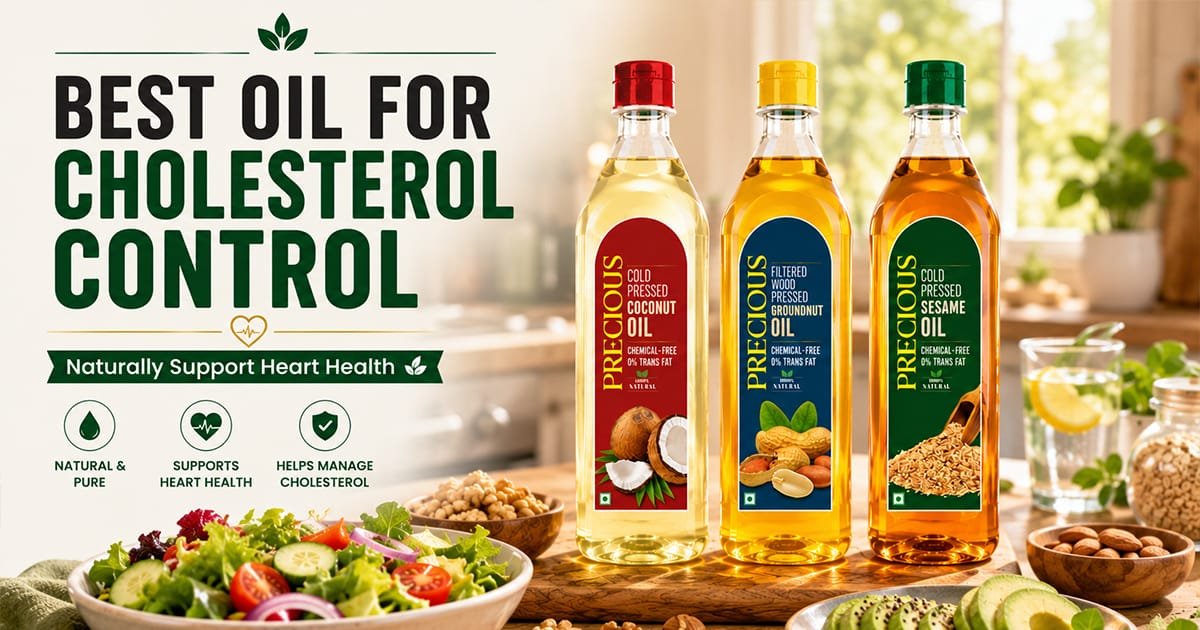
Best Oil for Cholesterol Control: What Science Says About Precious Oils
Choosing the best oil for cholesterol control is one of the most direct dietary changes you can make for your heart. This guide explains the specific compounds in Precious cold-pressed oils that actively lower LDL, raise HDL, and prevent LDL oxidation.
Quick Answer: The best oils for cholesterol control are those high in monounsaturated fats (MUFA) and natural antioxidants that lower LDL, raise HDL, and prevent LDL oxidation. Precious cold-pressed sesame oil and Precious wood-pressed groundnut oil are both excellent choices — sesame oil for its clinically studied cholesterol-lowering lignans (sesamol, sesamin), groundnut oil for its high MUFA content and resveratrol. Both are made using the traditional Mara Chekku wood-press method, retaining 100% of their natural compounds.
Cholesterol is one of the most misunderstood topics in Indian health. The word itself has become a source of fear — but cholesterol is not the enemy. It is an essential molecule that your body produces naturally and uses for cell membrane construction, hormone synthesis, and vitamin production. The real concern is not cholesterol per se, but the type of cholesterol (LDL vs HDL), its state (oxidised vs intact), and the dietary pattern that affects these factors every day.
The cooking oil you use every day is one of the most direct and modifiable dietary influences on your cholesterol profile. This guide explains exactly how different oils affect cholesterol, which oils support healthy levels, and why Precious cold-pressed oils are specifically beneficial for cholesterol management.
Contents
- 1 Understanding Cholesterol: LDL, HDL, and What Really Matters
- 2 How Cooking Oil Affects Cholesterol
- 3 The Antioxidant Advantage: Preventing LDL Oxidation
- 4 Precious Sesame Oil for Cholesterol: The Clinical Evidence
- 5 Precious Groundnut Oil for Cholesterol: The MUFA Powerhouse
- 6 Phytosterols: The Cholesterol Blockers in Every Bottle
- 7 A Practical Cholesterol-Friendly Cooking Plan with Precious Oils
- 8 What to Avoid: Oils That Worsen Cholesterol
- 9 Cold-Pressed Oil as Part of a Complete Cholesterol Management Strategy
- 10 Frequently Asked Questions
- 10.1 Which oil is best for cholesterol control?
- 10.2 Is sesame oil good for cholesterol?
- 10.3 Is groundnut oil good for cholesterol?
- 10.4 Is coconut oil good or bad for cholesterol?
- 10.5 Can oil reduce cholesterol without medication?
- 10.6 How quickly will cholesterol improve after switching to cold-pressed oil?
- 11 Conclusion: The Right Oil Is the Simplest Cholesterol Intervention
- 12 The Best Oil for Cholesterol Control: Making Your Choice
Understanding Cholesterol: LDL, HDL, and What Really Matters
What Is LDL Cholesterol?
LDL (Low-Density Lipoprotein) is commonly called “bad” cholesterol. It is a particle that carries cholesterol from the liver to cells throughout the body. When LDL levels are elevated — particularly when LDL is oxidised (damaged by free radicals) — it can build up in arterial walls, contributing to plaque formation and, over time, narrowing of the arteries (atherosclerosis). This is the process behind most heart attacks and strokes.
The distinction between regular LDL and oxidised LDL is crucial. Oxidised LDL is far more dangerous — it triggers immune responses that accelerate plaque formation. Antioxidants in your diet (including those in cold-pressed oils) directly prevent LDL oxidation.
What Is HDL Cholesterol?
HDL (High-Density Lipoprotein) is “good” cholesterol. It acts as a reverse transport system — carrying excess cholesterol from arterial walls and peripheral tissues back to the liver for processing and elimination. Higher HDL levels are strongly protective against cardiovascular disease.
The ideal cholesterol profile for heart health is not simply “low total cholesterol” — it is low LDL, low oxidised LDL, and high HDL. The right cooking oil affects all three.
The Triglyceride Factor
Triglycerides are fats in the blood that rise with excessive consumption of refined carbohydrates, sugar, and certain types of dietary fat. High triglycerides alongside low HDL and elevated LDL constitute a particularly high-risk cardiovascular profile. The fat composition of your cooking oil influences triglyceride levels — refined oils high in damaged, oxidised fats can worsen this profile, while the natural fatty acids in cold-pressed oils support normalisation.
How Cooking Oil Affects Cholesterol
Different types of dietary fat have different effects on cholesterol levels. Here is the science in plain terms:
Monounsaturated Fats (MUFA) — The Best for LDL and HDL
MUFA — particularly oleic acid (Omega-9), the main fat in olive oil and in Precious Groundnut Oil — actively lowers LDL cholesterol while maintaining or raising HDL. This is the fatty acid profile associated with the heart-health benefits of the Mediterranean diet. Indian groundnut oil, when cold-pressed, delivers equivalent MUFA content to olive oil.
Polyunsaturated Fats (PUFA) — Good for LDL, Neutral for HDL
PUFA — including both Omega-6 (linoleic acid) and Omega-3 (alpha-linolenic acid) — lowers LDL cholesterol, though it has a more neutral effect on HDL compared to MUFA. The key is that these fats must be in their natural, intact form. PUFAs are highly sensitive to heat and oxidation — processed or heated PUFA actually increases cardiovascular risk rather than reducing it. This is why the cold-pressing method, which keeps these fats intact, is so important.
Saturated Fats — Variable Effect Depending on Type
Not all saturated fats behave identically. Long-chain saturated fats (dominant in butter, ghee, and red meat) raise both LDL and HDL. The medium-chain saturated fats (MCT) in cold-pressed coconut oil — particularly lauric acid — raise HDL significantly while having a more moderate LDL-raising effect than long-chain equivalents. In the context of a traditional Indian plant-rich diet, the MCTs in Precious Coconut Oil contribute positively to the HDL/LDL ratio.
Trans Fats — The Worst: Raise LDL and Lower HDL
Trans fats are the most harmful dietary fat for cholesterol. They simultaneously raise LDL and lower HDL — the worst possible combination. They also increase inflammatory markers. Trans fats form during the high-heat deodorising step of refined oil processing. Precious cold-pressed oils contain zero trans fats — a significant advantage over industrially processed alternatives.
The Antioxidant Advantage: Preventing LDL Oxidation
This is where cold-pressed oils separate most decisively from refined alternatives in the context of cholesterol management.
Remember: it is not LDL itself that causes arterial plaques — it is oxidised LDL. The oxidation of LDL particles is triggered by free radicals in the bloodstream. Antioxidants from food — including Vitamin E, polyphenols, and sesame lignans — circulate in the blood and directly protect LDL particles from this oxidation.
Precious cold-pressed oils are rich in these antioxidants because they are never heated or chemically processed in ways that would destroy them. Refined oils have had 80–90% of their natural Vitamin E removed during high-temperature processing.
The practical implication: switching from refined oil to Precious cold-pressed oil reduces the oxidative stress on your LDL particles significantly — even before any change in LDL quantity. This is arguably as important as reducing total LDL levels.
Precious Sesame Oil for Cholesterol: The Clinical Evidence
Precious Cold-Pressed Sesame Oil is the oil with the most specific, direct research evidence for cholesterol management. Here is why:
The Sesame Lignans: Sesamol, Sesamin, and Sesamolin
Sesame seeds contain a unique family of antioxidant compounds called lignans. The main ones are sesamol, sesamin, and sesamolin. These compounds are found only in sesame — not in any other oil crop — and they are entirely absent in refined sesame oil (destroyed during high-heat deodorising).
Research on sesame lignans and cholesterol:
- A clinical study in the Journal of Medicinal Food found that substituting sesame oil as the sole cooking oil reduced total cholesterol and LDL significantly in hypertensive patients over 45 days
- Sesamol specifically inhibits the oxidation of LDL particles — addressing the mechanism of plaque formation directly
- Sesamin has been shown to reduce LDL cholesterol synthesis in the liver by modulating lipid metabolism pathways
- Sesamolin helps maintain the balance between LDL and HDL cholesterol in favour of better cardiovascular outcomes
These effects are exclusive to cold-pressed sesame oil that retains its lignans. Refined sesame oil provides none of them.
Sesame Oil and Blood Pressure: An Added Cardiovascular Benefit
High blood pressure is both a cardiovascular risk factor in itself and an accelerant of cholesterol-driven arterial damage. Multiple studies have shown that regular consumption of sesame oil — used as the primary cooking oil — produces modest but consistent reductions in blood pressure. The mechanism involves sesamol’s antioxidant activity in blood vessel walls, improving their flexibility and vasodilatory response.
Precious Groundnut Oil for Cholesterol: The MUFA Powerhouse
Precious Wood-Pressed Groundnut Oil contains approximately 46% oleic acid (MUFA) — making it one of the highest-MUFA cooking oils available in the Indian market. This fatty acid profile directly and meaningfully affects the LDL/HDL ratio:
- Oleic acid consumption is consistently associated with lower LDL cholesterol in population and intervention studies
- MUFA does not lower HDL (a problem with excessive PUFA consumption), maintaining the protective good cholesterol alongside reduced bad cholesterol
- Oleic acid is less prone to oxidation than PUFA, meaning the fats themselves are more stable and less likely to generate harmful oxidation byproducts during cooking
Resveratrol: Groundnut’s Cardiovascular Supercompound
Resveratrol is the polyphenol compound that brought red wine to the attention of cardiovascular researchers. Less known is that groundnuts are also a significant source of resveratrol — particularly in the skin. Precious Wood-Pressed Groundnut Oil, pressed with the skin intact, retains resveratrol that is absent in refined groundnut oil.
Resveratrol’s cardiovascular effects include:
- Inhibition of LDL oxidation — directly reducing plaque-forming risk
- Reduction of platelet aggregation — reducing blood clot risk
- Vasodilatory effect — relaxing blood vessel walls, supporting blood pressure regulation
- Anti-inflammatory action in arterial walls — reducing the immune response that accelerates atherosclerosis
Phytosterols: The Cholesterol Blockers in Every Bottle
Phytosterols (plant sterols) are compounds in seed oils structurally similar to cholesterol. When consumed, they compete with dietary cholesterol for absorption in the intestinal wall — blocking a significant portion from entering the bloodstream.
Clinical research on phytosterols:
- Consuming 2–3 grams of phytosterols daily reduces LDL cholesterol by 8–10% in clinical studies
- The effect is additive with statin medication (for those already prescribed cholesterol-lowering drugs)
- Phytosterols are the active ingredient in expensive fortified functional foods marketed specifically for cholesterol reduction
Precious cold-pressed oils contain naturally occurring phytosterols (β-sitosterol, campesterol, stigmasterol) in meaningful amounts — because cold pressing does not heat the oil enough to degrade them. Refined oils lose most of their phytosterols during bleaching and deodorising. Every meal cooked in Precious oil delivers a natural daily dose of these cholesterol-blocking compounds.
A Practical Cholesterol-Friendly Cooking Plan with Precious Oils
Daily Oil Rotation Strategy
For people specifically managing cholesterol, a rotation of Precious oils across the week provides a comprehensive range of protective compounds:
- Monday, Wednesday, Friday: Precious Groundnut Oil for all main cooking — maximum MUFA and resveratrol for LDL management
- Tuesday, Thursday: Precious Sesame Oil as the primary cooking oil — maximises sesame lignan intake for cholesterol and blood pressure benefits
- South Indian dishes any day: Precious Coconut Oil for Kerala-style cooking and tempered dishes where the flavour is essential
- Raw uses daily: Drizzle Precious Sesame Oil over curd rice, stir it into podi, or use it as a raw finish on cooked vegetables for maximum antioxidant benefit without heat degradation
Cholesterol-Friendly Indian Recipes Using Precious Oils
Sesame-Dressed Sprouted Moong Salad
Toss sprouted moong with finely diced tomato, cucumber, coriander, and one green chilli. Add the juice of one lime and one tablespoon of Precious Sesame Oil directly. Season with rock salt. This delivers raw sesamol, Vitamin E, and MUFA alongside the fibre and plant protein of sprouted moong — a genuinely powerful cholesterol-management combination.
Groundnut Oil Masoor Dal with Turmeric
Prepare masoor dal (red lentils) with turmeric, ginger, and tomato. Prepare a tadka with Precious Groundnut Oil, mustard seeds, cumin, curry leaves, and garlic at medium heat. The MUFA in the groundnut oil, combined with the soluble fibre in masoor dal and the anti-inflammatory curcumin in turmeric, makes this one of the most cholesterol-supportive meals in the Indian repertoire.
Sesame Oil Rasam
Prepare a classic pepper-tamarind rasam. Add a final temper of Precious Sesame Oil with black pepper, cumin, and curry leaves over very low heat. The sesamol from the sesame oil combined with the piperine from black pepper provides complementary anti-inflammatory and cholesterol-protective effects.
What to Avoid: Oils That Worsen Cholesterol
For completeness, here are the practices and oil types most associated with poor cholesterol outcomes:
- Repeatedly reused frying oil: Every time oil is heated and cooled, it generates more oxidised fatty acids and trans fats. Never reuse oil more than once, regardless of type.
- Heavily processed refined oils: Stripped of natural antioxidants, potentially containing trace trans fats from high-heat deodorising, and loaded with synthetic preservatives.
- Vanaspati (hydrogenated vegetable oil): High in trans fats. Known to significantly raise LDL and lower HDL. Avoid entirely.
- Margarine (unless specifically certified trans-fat-free): Traditional margarine contains significant trans fats.
Cold-Pressed Oil as Part of a Complete Cholesterol Management Strategy
Cooking oil is one part of the picture. For comprehensive cholesterol management, the oil choice needs to sit within a broader dietary and lifestyle approach:
- High soluble fibre diet: Oats, barley, dal, kidney beans, okra, and psyllium husk all reduce cholesterol absorption. Combine these foods with your Precious oil-based cooking for maximum effect.
- Nuts and seeds: Walnuts (Omega-3), almonds (Vitamin E and MUFA), and flaxseeds (ALA Omega-3) provide complementary cardiovascular support alongside your cooking oil.
- Physical activity: Even 30 minutes of moderate walking daily meaningfully raises HDL cholesterol. No dietary change fully compensates for physical inactivity.
- Limit refined carbohydrates and sugar: White rice in excess, refined flour products, and sugary beverages raise triglycerides and lower HDL — worsening the overall lipid profile even if your oil choice is good.
- Medication when prescribed: For people with significantly elevated LDL or familial hypercholesterolaemia, dietary changes support but do not replace prescribed medication. Always follow your doctor’s guidance.
Frequently Asked Questions
Which oil is best for cholesterol control?
For the most direct clinical evidence, Precious Cold-Pressed Sesame Oil stands out — its unique lignans (sesamol, sesamin) have demonstrated LDL-lowering and antioxidant effects in clinical studies specific to cholesterol management. Precious Wood-Pressed Groundnut Oil is the best everyday choice with its high MUFA content. Both are produced using the traditional Mara Chekku wood-pressing method that preserves these beneficial compounds fully.
Is sesame oil good for cholesterol?
Yes — specifically cold-pressed sesame oil that retains its sesame lignans. Research has shown sesamol and sesamin directly inhibit LDL oxidation and reduce total LDL cholesterol when sesame oil is used as the primary cooking fat. Refined sesame oil, which has been heated to 260°C, does not retain these lignans and provides none of these benefits.
Is groundnut oil good for cholesterol?
Yes. Precious Wood-Pressed Groundnut Oil is approximately 46% oleic acid (MUFA) — the same type of fat responsible for olive oil’s heart health reputation. MUFA consistently lowers LDL while maintaining HDL. Groundnut oil also contains resveratrol (which prevents LDL oxidation) and phytosterols (which block cholesterol absorption).
Is coconut oil good or bad for cholesterol?
Precious Cold-Pressed Coconut Oil raises both LDL and HDL cholesterol — but its dominant effect on HDL (the good cholesterol) is significant. The overall LDL/HDL ratio impact depends heavily on the total dietary pattern. In the context of a traditional South Indian plant-rich diet with abundant fibre, coconut oil’s effect on HDL is a net benefit. It should be used in traditional amounts (not in industrial quantities) as part of a balanced diet.
Can oil reduce cholesterol without medication?
Dietary changes including switching to cold-pressed oils, increasing soluble fibre, and reducing refined carbohydrates can meaningfully lower LDL cholesterol — research shows 10–20% reductions are achievable through diet alone in people with mildly to moderately elevated LDL. For significantly elevated cholesterol or familial hypercholesterolaemia, medication is typically also needed. Always work with your doctor to determine the appropriate management strategy for your specific situation.
How quickly will cholesterol improve after switching to cold-pressed oil?
Dietary changes typically take 3–6 months to register in blood work. Consistency is important — the benefit from replacing refined oil with Precious cold-pressed oils is cumulative. Do not expect dramatic changes at your next blood test in 4 weeks, but expect meaningful improvement over 6 months of consistent use alongside a broadly healthy diet and regular physical activity.
Conclusion: The Right Oil Is the Simplest Cholesterol Intervention
Of all the dietary changes you could make for cholesterol management, switching your cooking oil is one of the most straightforward. You do not change what you eat. You do not change your recipes. You change the bottle on the shelf — and with it, what your body receives from every meal.
Precious cold-pressed sesame oil and Precious wood-pressed groundnut oil are specifically beneficial for cholesterol management: the sesame oil for its clinical-grade lignans and direct LDL-lowering evidence, the groundnut oil for its high MUFA content, resveratrol, and phytosterols. Both are made without chemicals or excessive heat, retaining every compound that makes the oil nutritionally valuable.
Choosing Precious is not a dramatic lifestyle change. It is a daily choice — the same choice your grandmother made when she sent the household seeds to the local chekku kadai each week. She did not know the word “phytosterol.” She just knew the oil tasted better and the family was healthy. That wisdom, expressed in every bottle of Precious, is available to your kitchen again.
Support healthy cholesterol the traditional way. Shop Precious cold-pressed oils at shop Precious cold pressed oils
The Best Oil for Cholesterol Control: Making Your Choice
Identifying the best oil for cholesterol control requires understanding which oils work mechanistically — not just which are marketed as heart-healthy. The best oil for cholesterol control must lower LDL through MUFA content, prevent LDL oxidation through antioxidants, block cholesterol absorption through phytosterols, and contain zero trans fats. Precious cold-pressed sesame and groundnut oils meet all four criteria.
The best oil for cholesterol control in Indian cooking is not a single choice but a rotation: Precious Sesame Oil for its clinical-grade lignan evidence on LDL reduction, and Precious Groundnut Oil as the everyday MUFA-rich base. Together they cover the full spectrum of cholesterol-supporting mechanisms available from dietary fat.
Choosing between sesame, groundnut, and coconut oil? Our guide to the best cold pressed cooking oils in India will help you decide.
Looking for broader heart wellness benefits beyond cholesterol? Our article on cold pressed oil for overall heart health covers blood pressure, antioxidants, and arterial health.
Further reading: NCBI: Sesame oil and cardiovascular risk factors — peer-reviewed clinical study. WHO Cardiovascular Diseases — global and India-specific statistics.
Related reading on Precious blog: Health Benefits of Cold Pressed Oils: Everything You Need to Know — a complete guide to antioxidants, vitamins, and why traditional cold pressed oils support overall wellness.
Disclaimer: This article is for educational purposes only and does not constitute medical advice. Cholesterol management often requires professional medical guidance, especially for those with diagnosed conditions or on medication. All Precious products are FSSAI compliant. Consult your doctor or a registered dietitian for personalised advice.
Try These Recipes with Precious Cold Pressed Oil

Written by
Suren is the co-founder of KN Agro Concepts and the creator of Precious cold-pressed oils. Based in Tamil Nadu, he has spent years working directly with traditional Mara Chekku wood-press artisans to bring authentic, chemical-free oils from Coimbatore to health-conscious families across India. He writes about cold-pressed oil, traditional Indian food practices, and the science of natural nutrition.
Follow on Facebook →
One Comment