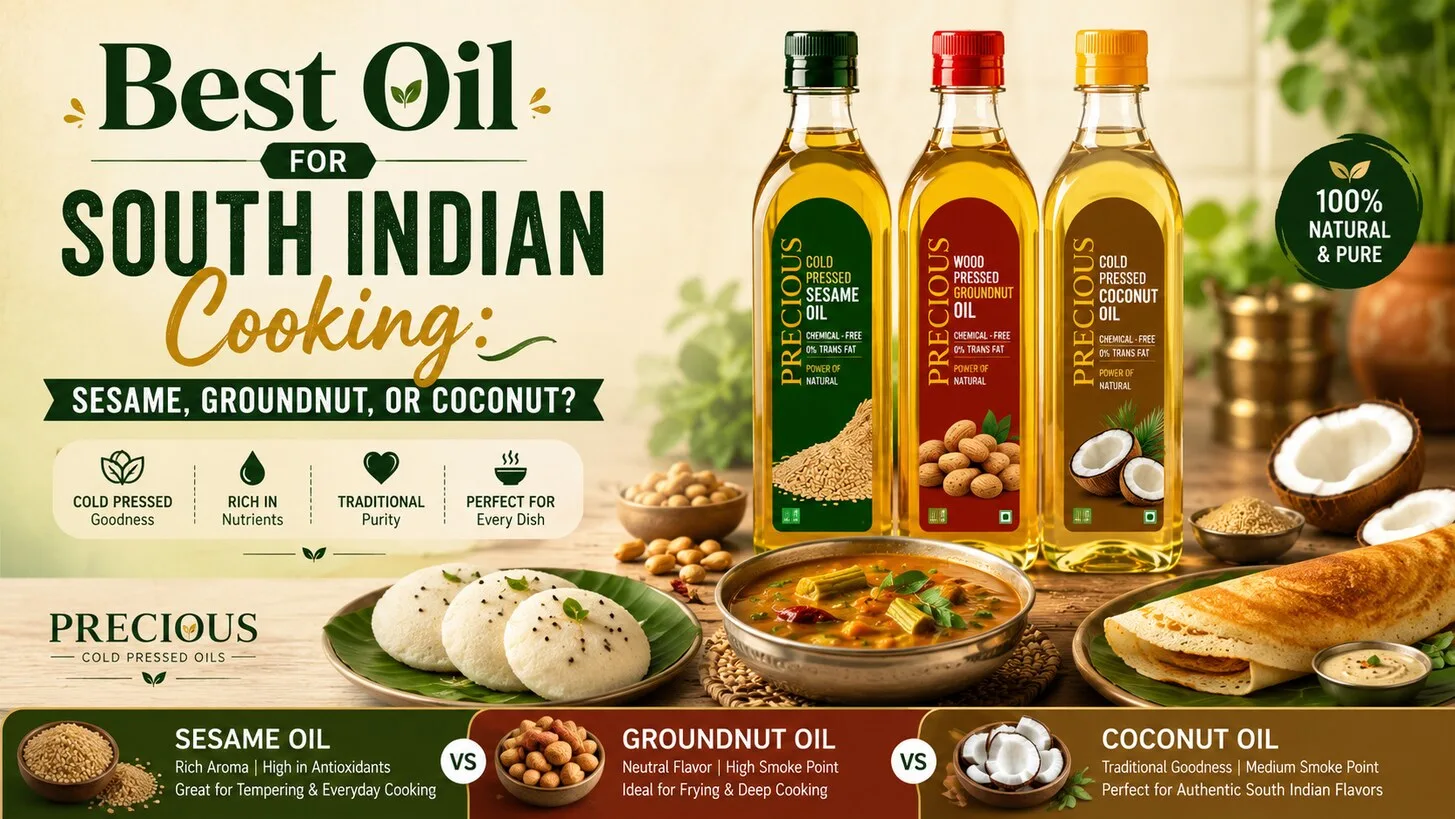
Best Oil for South Indian Cooking: Sesame, Groundnut, or Coconut?
South Indian cooking has its own oil logic — one that refined oils have systematically erased from most kitchens over the last 30 years. This guide explains which cold pressed oil works best for each style of South Indian cooking, and why the oil choice matters more here than in almost any other cuisine.
Quick Answer: There is no single best oil for South Indian cooking; traditional kitchens use three. Sesame oil (nallennai) goes into kuzhambu, podi and pickles. Groundnut oil (kadalai ennai) is the everyday choice for poriyal, dosa and frying. Coconut oil (thengai ennai) is used for Kerala-style dishes, avial and appam. Cold pressed versions of all three keep the aroma these dishes depend on.
Contents
The Three Oils That Power Best South Indian Cooking
Authentic South Indian cooking uses three distinct oils — each for a specific purpose — rather than one multipurpose refined oil. Once you understand why, you’ll never go back.
Cold Pressed Sesame Oil (Nalla Ennai / Gingelly Oil)
Sesame oil is the backbone of Tamil Nadu’s most complex dishes. Vatha Kuzhambu, Kara Kulambu, and traditional pickles are built on cold pressed sesame oil. The unique lignans — sesamol and sesamin — give it its characteristic deep, earthy flavour and its legendary natural preservative quality. Cold pressed sesame oil solidifies slightly in the fridge, has an intense nutty aroma, and colours your curry in a way no refined oil can replicate.
Best for: Vatha Kuzhambu, Kara Kulambu, Kootu, Poriyal, traditional pickles, Pongal tadka.
Cold Pressed Groundnut Oil (Verkadalai Ennai)
Groundnut oil has the highest smoke point (~160°C) of the three, making it the workhorse for deep frying and long-cooked curries. Its flavour is neutral enough to let spices and masalas dominate while adding a quiet richness. Genuine cold pressed groundnut oil smells unmistakably of fresh peanuts and contains natural resveratrol — a compound with documented cardiovascular benefits that disappears entirely during refining.
Best for: Crispy fried chicken, biryanis, Chettinad curries, daily tadka, deep frying at medium flame.
Cold Pressed Coconut Oil (Thengai Ennai)
Coconut oil is the traditional choice across Kerala and coastal Tamil Nadu. Its medium-chain triglycerides (MCTs) are absorbed directly by the body for quick energy. Cold pressed coconut oil solidifies below 24°C (this is normal and a sign of purity) and has a mild, sweet coconut aroma. Don’t confuse it with refined coconut oil — the aroma and nutritional profile are completely different.
Best for: Avial, Thoran, Kerala Fish Curry, Stew, sweet dishes, Semolina Halwa.
Why Marachekku Oil Tastes Different
The extraction method matters as much as the oil type. Traditional wooden press (Marachekku) extraction stays below 45°C because wood absorbs friction heat. Metal expeller presses — even those labelled “cold pressed” — routinely reach 45–70°C from friction alone. Above 45°C, Vitamin E begins to degrade. Above 60°C, the flavour compounds that make sesame oil smell like sesame begin to break down.
Precious oils are extracted using the traditional Marachekku wooden press in Coimbatore, Tamil Nadu — the heartland of chekku ennai production. The difference is detectable in the first spoonful.
Oil Guide by Dish Type
- Vatha Kuzhambu / Kara Kulambu: Cold pressed sesame oil, no substitute
- Biryani (Tamil Nadu, Ambur, Chettinad): Cold pressed groundnut oil
- Poriyal / Kootu: Sesame oil for tempering, groundnut for cooking
- Sambar: Cold pressed groundnut oil
- Rasam: Sesame oil tempering for authentic flavour
- Idli / Dosa batter: No oil needed; sesame oil for the pan
- Kerala Avial: Cold pressed coconut oil, stirred in at the end
- Fish Curry (Kerala): Cold pressed coconut oil
- Chettinad Chicken: Cold pressed groundnut oil
- Payasam / Kheer: Cold pressed coconut oil or ghee
How to Identify Genuine Cold Pressed Oil
The smell test is the most reliable indicator. Open the bottle:
- Sesame oil: Intense, deeply nutty, almost smoky aroma. If it smells mild, it’s refined.
- Groundnut oil: Clear peanut smell, like holding fresh groundnuts. No smell = refined.
- Coconut oil: Sweet, tropical, distinctly coconut. White and solid below 24°C.
Cooking Tips for Cold Pressed Oils in South Indian Kitchens
- Use medium flame consistently — cold pressed oils perform best below 160°C
- Add sesame oil at the end of cooking for maximum flavour preservation
- Cold pressed groundnut oil is stable enough for repeat frying (2–3 uses)
- Store away from direct sunlight in a cool, dry place
- The strong initial aroma reduces slightly during cooking — this is normal
Ready to cook authentic South Indian food the traditional way?
Shop Precious Cold Pressed Oils → National Institute of Nutrition (NIN) recommends rotating cooking oils for balanced fat intake.
Try These South Indian Recipes with Cold Pressed Oil
- Kara Kulambu — made with cold pressed sesame oil
- Vada Curry — Chennai classic in sesame oil
- Pepper Rasam (Milagu Rasam) — sesame oil tadka
- Ambur Chicken Biryani — made in cold pressed groundnut oil
- Chettinad Egg Curry — authentic Chettinad spices in groundnut oil

Written by
Suren is the co-founder of KN Agro Concepts and the creator of Precious cold-pressed oils. Based in Tamil Nadu, he has spent years working directly with traditional Mara Chekku wood-press artisans to bring authentic, chemical-free oils from Coimbatore to health-conscious families across India. He writes about cold-pressed oil, traditional Indian food practices, and the science of natural nutrition.
Follow on Facebook →