
Best Wood Pressed Cooking Oil: The Ultimate Guide for Indian Kitchens
Quick Answer: The best wood-pressed cooking oils are those made using the traditional wooden churner (Mara Chekku / Kachi Ghani) that keeps extraction temperature below 45°C — preserving 100% of natural vitamins, antioxidants, and flavour. Precious wood-pressed groundnut oil, sesame oil, and coconut oil are made using this authentic method in Tamil Nadu, delivering chemical-free, nutrient-rich oils for everyday Indian cooking.
The resurgence of wood-pressed oils in Indian kitchens is not a trend. It is a return to something that worked beautifully for thousands of years before industrial food processing changed the way we cook. Traditional Mara Chekku oil — pressed slowly through a wooden churner, untouched by heat or chemicals — is a fundamentally different product from anything processed in a modern factory.
This guide covers everything you need to know about wood-pressed cooking oils: what they are, how they are made, which varieties to choose, how to cook with them, and how to spot the real thing from the many impostors on the market.
Contents
- 1 What Is Wood-Pressed Oil? The Traditional Method Explained
- 2 Why Wood Pressing Produces Superior Oil
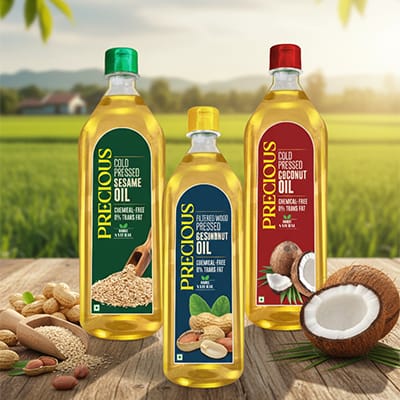
- 3 The Precious Wood-Pressed Oil Range
- 4 How to Cook with Wood-Pressed Oils: A Complete Practical Guide
- 5 How to Identify Genuine Wood-Pressed Oil
- 6 Storing Wood-Pressed Oils to Preserve Quality
- 7 Beyond Cooking: Other Uses of Wood-Pressed Oils
- 8 Frequently Asked Questions
- 9 Conclusion: The Oldest Oil Method Is Still the Best
What Is Wood-Pressed Oil? The Traditional Method Explained
Wood pressing — known as Mara Chekku in Tamil, Kachi Ghani in Hindi/Punjabi, and Chekku Ennai in Telugu — is the oldest method of oil extraction known to human civilisation.
The apparatus is elegant in its simplicity: a large wooden mortar and pestle (the ghani), traditionally driven by a bull walking in a slow circle. Modern interpretations use an electric motor to turn the wooden shaft, but the fundamental mechanics remain identical. Seeds are placed in the wooden mortar, and the rotating pestle slowly crushes them, releasing oil through the natural pressure of the crushing action.
What makes wood pressing special is what does not happen:
- No external heat source is used
- No chemical solvents (like hexane) are used
- The wooden surfaces absorb friction heat rather than transmitting it to the oil
- The oil emerges at room temperature — typically below 45°C
- Only cloth filtration is used — no chemical clarification
The result is oil in its truest form: a direct liquid extract of the seed, carrying everything nature put inside — vitamins, antioxidants, flavour compounds, aromatic molecules, and beneficial plant chemicals.
Wood-Pressed vs Cold-Pressed vs Expeller-Pressed: The Differences
These three terms are often used interchangeably but they describe different things:
| Method | How It Works | Temperature | Nutrition Retention |
|---|---|---|---|
| Wood-Pressed (Mara Chekku) | Wooden mortar and pestle; wood absorbs heat | < 45°C | Maximum — 100% |
| Cold-Pressed (metal expeller, low speed) | Metal screw press at controlled low speed | 45–70°C | Good — 80–90% |
| Expeller-Pressed (high speed) | High-pressure metal screw press at high speed | 80–120°C (from friction) | Moderate — 50–70% |
| Refined (chemical extraction) | Hexane solvent + high-heat processing | Up to 260°C | Poor — 10–20% |
Precious specifically uses the wood-pressing method — the most temperature-gentle extraction available, not just technically compliant with “cold-pressed” standards but genuinely cold at source.
Why Wood Pressing Produces Superior Oil
Temperature Is Everything
Heat is the enemy of nutritional quality in cooking oil. At elevated temperatures:
- Vitamin E (tocopherols) begins to degrade above 100°C
- Phenolic antioxidants (sesamol, resveratrol) are destroyed above 80°C
- Volatile aroma compounds — the things that make groundnut oil smell like peanuts — evaporate above 60°C
- Beneficial plant sterols (phytosterols) begin to oxidise above 150°C
Wood pressing keeps the oil below 45°C throughout. At this temperature, all of these compounds remain fully intact. This is not a marginal difference — it is the difference between oil that is nutritionally alive and oil that is nutritionally inert.
Mechanical Efficiency vs Nutritional Quality
A hexane extraction plant can extract 99% of the available oil from a seed. Wood pressing extracts only 50–60%. The other 40–50% stays in the seed cake (the solid byproduct of pressing, which is then used as animal feed or compost).
This lower yield is why wood-pressed oil costs more per litre. It also explains why it has historically been the village oil and why industrial food processing moved away from it in the 20th century. But for the consumer who values nutrition, this lower extraction rate is a feature, not a failure. The oil that wood pressing extracts is the richest, most antioxidant-loaded, most nutritionally complete fraction of the seed.
The Precious Wood-Pressed Oil Range
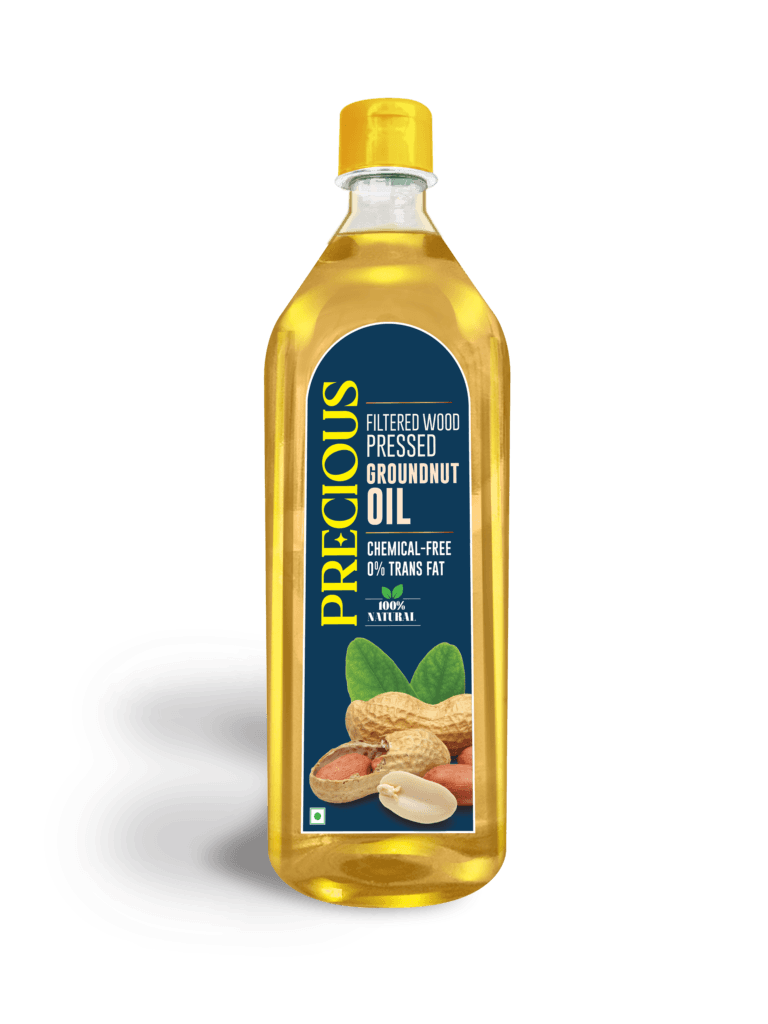
Precious Wood-Pressed Groundnut Oil
Made from premium-grade groundnuts (peanuts) sourced from Tamil Nadu’s best agricultural regions, slowly pressed through our traditional Mara Chekku apparatus until rich golden oil flows freely from the wooden mortar.
What you can smell and see: Rich, warm peanut aroma. Deep golden colour, not pale. A very slight natural cloudiness in freshly pressed batches — a positive sign of cloth filtration rather than chemical clarification.
Nutritional highlights:
- ~46% monounsaturated fat (oleic acid / Omega-9) — heart-healthy, cholesterol-lowering
- ~34% polyunsaturated fat (linoleic acid / Omega-6) — essential fatty acid
- Vitamin E fully retained — powerful antioxidant, anti-inflammatory
- Resveratrol present — the same compound found in red wine, associated with heart health
- Phytosterols intact — block cholesterol absorption in the digestive system
Best for: All everyday cooking — tadkas, curries, sabzi, deep frying, shallow frying, sautéing. The most versatile oil in the Precious range with the highest smoke point (~160°C).
Traditional uses: The traditional cooking oil of Tamil Nadu and much of South India. Used for murukku, mixture, and all festival snacks. The authentic Chettinad cooking base.
Order Precious Groundnut Oil →
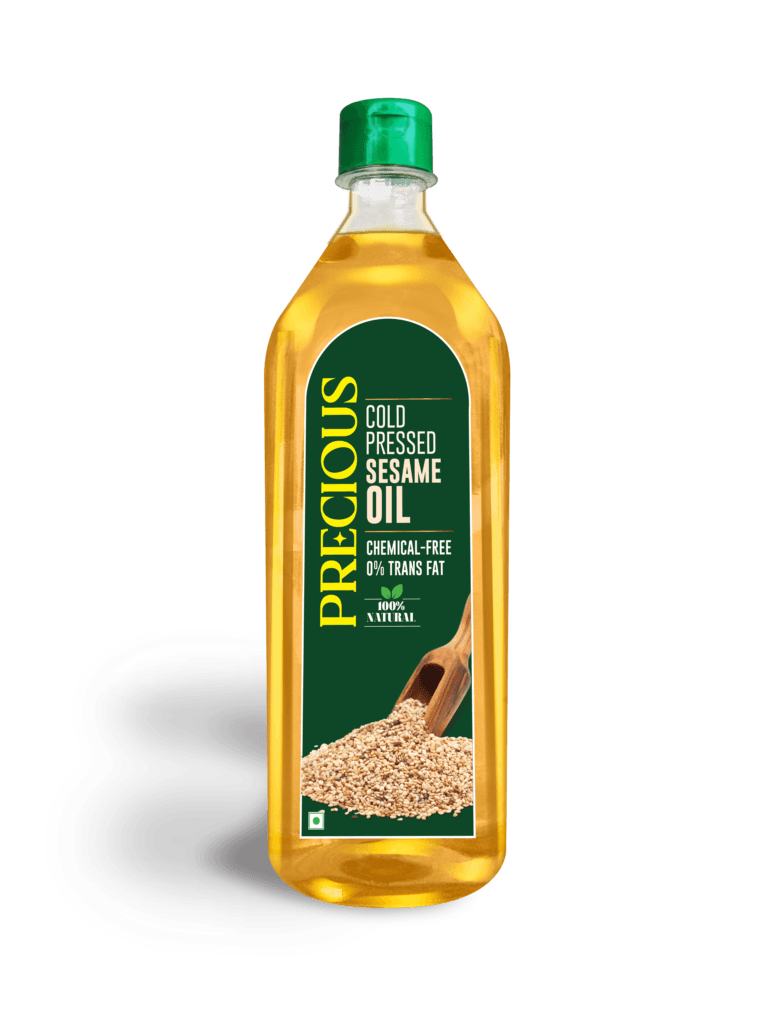
Precious Cold-Pressed Sesame Oil
Made from handpicked white sesame seeds slowly pressed using our wooden churner. Sesame oil pressed this way retains its unique family of lignans — sesamol, sesamin, and sesamolin — that are exclusive to sesame and are completely destroyed by refining.
What you can smell and see: Deep amber to dark gold colour. Intensely earthy, nutty aroma — unmistakable. The smell alone tells you this is a genuinely unrefined product.
Nutritional highlights:
- ~45% polyunsaturated fat (Omega-6) balanced with ~40% monounsaturated fat
- Sesamol, sesamin, sesamolin — unique antioxidant lignans exclusive to sesame, linked to lower LDL and blood pressure
- Vitamin E (tocopherols) fully retained
- Vitamin K present — bone health, blood clotting
- Zinc and magnesium — skin, collagen, muscle function
Best for: South Indian cooking — vatha kuzhambu, kootu, poriyal tempering, idli podi mixing. Pickles. Raw drizzle on curd rice or finished dishes. Oil pulling (Ayurvedic oral care). Traditional massage.
Traditional uses: The sacred oil of South Indian culture. Used in temple rituals, traditional medicine (Siddha and Ayurveda), festive cooking, and as a preservative in homemade pickles. Gingelly oil (as it is known in South India) has been pressed and used continuously in this region for over 3,000 years.
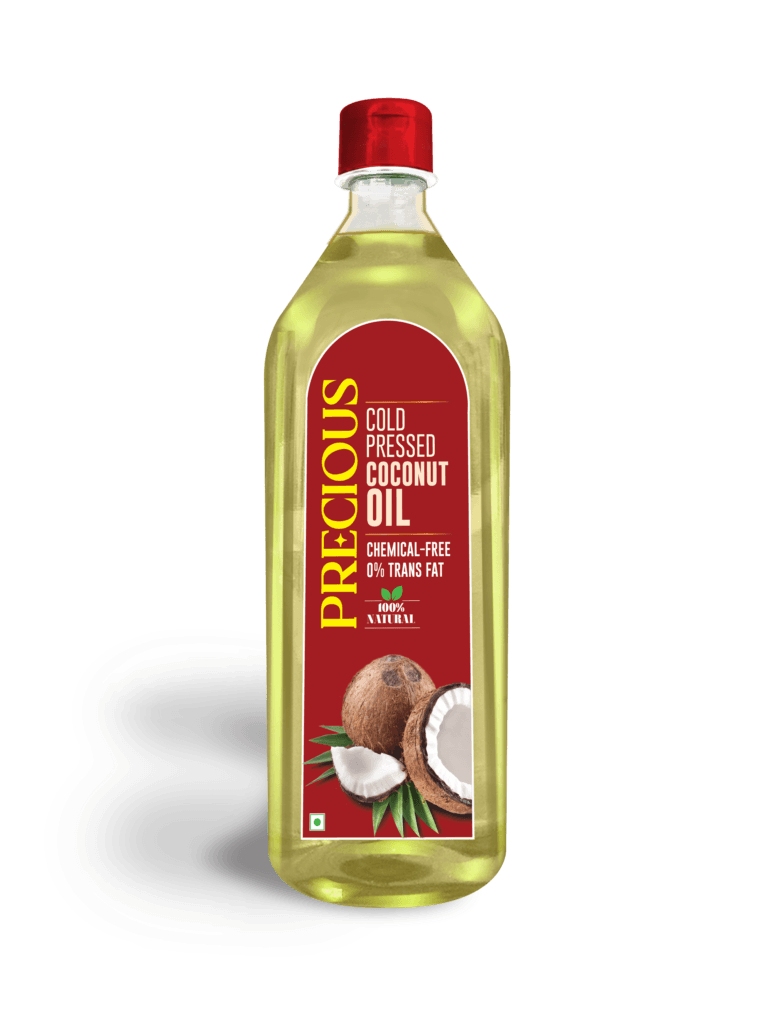
Precious Cold-Pressed Coconut Oil
Made from the flesh of mature coconuts, pressed cold through our wooden extraction process. Unlike some coconut oil production that uses pre-dried copra, Precious Coconut Oil is pressed from carefully selected, traditionally processed coconuts to preserve the full spectrum of naturally occurring MCTs and polyphenols.
What you can smell and see: Crystal white when solid (below ~24°C), perfectly clear liquid when warm. Sweet, fresh coconut aroma. If there is no smell, the coconut oil has been refined. Precious smells like coconut because it is coconut.
Nutritional highlights:
- ~50% lauric acid (MCT) — antimicrobial, raises HDL cholesterol, immediate energy source
- ~16% capric and caprylic acid (MCT) — energy, gut health
- Natural polyphenols fully retained — anti-inflammatory
- Vitamin E present — antioxidant, skin health
- Zero trans fats (compared to some cold-pressed coconut oils that have been partially hydrogenated)
Best for: Kerala cuisine — Avial, Thoran, Appam, Puttu, fish curry. Baking (excellent butter substitute). Baby massage. Skin and hair moisturising. Oil pulling.
Traditional uses: The backbone of Kerala and coastal Indian cooking for millennia. Also a cornerstone of traditional Ayurvedic medicine — used both internally and externally for its antimicrobial and nourishing properties.
How to Cook with Wood-Pressed Oils: A Complete Practical Guide
The Golden Rules
Wood-pressed oils are not fragile — they have been used for high-heat Indian cooking for thousands of years. But they are genuine food products, not industrial chemicals engineered to survive 260°C. Use them with a little respect and they will reward you with flavour and nutrition no refined oil can match.
- Medium heat as your default: For most cooking — tadka, curry, sautéing — medium heat is ideal. The oil heats faster than you expect because it is not padded with refining agents. A hot pan + medium flame = perfect cooking temperature.
- Watch for smoke as your temperature signal: If Precious Groundnut Oil smokes, your heat is above its smoke point (~160°C). Reduce the flame. This is a useful feedback signal that refined oils do not give you because their smoke point has been raised artificially.
- Season your taste: The flavour of wood-pressed oil is part of the dish. South Indian cooking has been built around the flavour of gingelly (sesame) oil. Chettinad cooking around groundnut oil. Kerala cooking around coconut oil. These are not neutral carriers — they are ingredients that enhance everything they touch.
- Less is more: The strong flavour of authentic Precious oils means you naturally use slightly less. You reach flavour satisfaction faster. A tablespoon of Precious Groundnut Oil in a dal tadka does more flavour work than two tablespoons of refined oil.
Temperature Guide for Indian Cooking
| Cooking Method | Temperature | Best Precious Oil |
|---|---|---|
| Raw drizzle / salad dressing | Room temperature | Sesame or Groundnut |
| Gentle sautéing / sweating | 100–130°C | Any Precious oil |
| Tadka / tempering | 140–160°C | Sesame or Groundnut |
| Standard curry cooking | 130–160°C | Groundnut or Coconut |
| Shallow frying | 150–170°C | Groundnut Oil |
| Deep frying | 160–175°C | Groundnut Oil |
| Baking | 160–200°C (inside oven) | Coconut Oil |
Regional Cooking Traditions and Wood-Pressed Oil Pairings
Tamil Nadu / South India: Gingelly (sesame) oil for tempering and pickle preservation; groundnut oil for festival snacks and Chettinad curries. Both in daily use across the state.
Kerala: Coconut oil for virtually everything — curries, frying, Avial, Thoran. Irreplaceable for authentic Kerala flavour.
Andhra Pradesh / Telangana: Groundnut oil (locally called pallelu nune) is the dominant cooking oil. Avakkai mango pickle is traditionally made with mustard oil but uses sesame as a preservative component.
North India: Kachi Ghani mustard oil dominates, but wood-pressed groundnut oil has a strong traditional presence in Rajasthan and Gujarat for dals and rotis.
How to Identify Genuine Wood-Pressed Oil
The market is crowded with oils that claim to be wood-pressed or cold-pressed but are not. Here is a definitive test protocol:
The Sensory Test
- Open the cap and smell: Genuine wood-pressed groundnut oil smells powerfully of fresh peanuts. Sesame oil smells intensely earthy and nutty. Coconut oil smells sweet and tropical. If you open a bottle and smell nothing, or smell something chemical, it has been refined.
- Look at the colour: Groundnut oil should be rich golden yellow — not pale straw, not colourless. Sesame oil should be deep amber. Coconut oil should be crystal white when solid, perfectly clear when liquid. Pale or colourless versions have been bleached.
- Look for natural sediment: A very slight cloudiness or fine sediment at the bottom of the bottle is a positive sign. This is natural fine particles from cloth filtration. It means the oil has not been chemically clarified. You can filter it through a fine cloth before use if you prefer clarity.
The Label Test
- Look for explicit mention of Mara Chekku, Kachi Ghani, or wood-pressed — not just “cold-pressed” (which in India can mean expeller-pressed at 80–120°C)
- Check the ingredient list: it should say only the seed name. Any additives or preservatives indicate processing.
- Check the price: genuine wood-pressed oil costs significantly more than refined oil because 2–3 times more seeds are needed per litre
The Refrigerator Test (Coconut Oil Only)
Pure cold-pressed coconut oil solidifies into a uniform white solid when refrigerated. If it separates into layers or remains liquid, it may be adulterated or partially refined.
Storing Wood-Pressed Oils to Preserve Quality
Wood-pressed oils are living food products. Unlike refined oils engineered for 24-month shelf life, they should be treated with the same care as any fresh, natural food.
- Store away from direct sunlight: UV light degrades antioxidants. A dark pantry shelf or cupboard is ideal. Avoid placing on the counter next to a window.
- Keep away from heat sources: Do not store next to the stove or in a warm cabinet above the oven. Room temperature or slightly cool is ideal.
- Seal tightly after every use: Oxidation from air contact is the primary cause of rancidity. Close the cap firmly after pouring.
- Use within 6–9 months of opening: Unlike refined oils that last 18–24 months, Precious oils are best used within 6–9 months of opening. Precious Sesame Oil has the longest natural life due to its powerful sesamo-lignin antioxidants.
- Trust your nose: Fresh Precious Groundnut Oil smells like peanuts. Fresh Precious Sesame Oil has that distinctive earthy aroma. If the smell becomes sharp, acrid, or chemical, the oil has gone rancid. Discard it and replace.
Beyond Cooking: Other Uses of Wood-Pressed Oils
The purity of Precious wood-pressed oils makes them suitable for uses beyond the kitchen.
Skin Care
- Precious Sesame Oil: The traditional Ayurvedic massage oil. Warm slightly and use for full-body Abhyanga (self-massage). Deeply moisturising, rich in Vitamin E, and with natural SPF properties. The sesamol in Precious sesame oil has demonstrated skin-protective antioxidant activity.
- Precious Coconut Oil: A beloved natural moisturiser and makeup remover. The lauric acid provides antimicrobial protection that benefits acne-prone skin. Apply to dry patches, elbows, and as a lip balm.
Hair Care
- Precious Sesame Oil: Warm oil massage for the scalp — the traditional Indian champi (head massage). Deeply nourishing for hair follicles. Research suggests regular scalp massage with sesame oil reduces dryness and improves hair lustre.
- Precious Coconut Oil: The most scientifically studied oil for hair care. Research in the Journal of Cosmetic Science found that coconut oil is unique among oils in its ability to penetrate the hair shaft and reduce protein loss. Applied before washing, it significantly reduces hair damage.
Oral Care
Precious Sesame Oil is the traditional oil used for oil pulling (kavala) in Ayurvedic practice. Swishing a tablespoon for 10–20 minutes before brushing has been shown in limited studies to reduce oral bacteria and improve gum health. If you are going to try oil pulling, a food-grade, chemical-free oil like Precious Sesame is the appropriate choice.
Frequently Asked Questions
What is the best wood-pressed oil for everyday cooking?
Precious Wood-Pressed Groundnut Oil is the most versatile choice for everyday Indian cooking. Its smoke point (~160°C) handles tempering, frying, and sautéing. Its flavour is warm and neutral enough for most cuisines, and its nutritional profile — high MUFA, Vitamin E, resveratrol — is excellent for daily use.
Is wood-pressed oil better than cold-pressed oil?
Wood pressing is the highest-quality form of cold pressing. Metal expeller presses labelled as “cold-pressed” still generate 45–70°C from friction. Wood pressing keeps temperatures below 45°C because wood absorbs and insulates rather than transmitting heat. For maximum nutritional retention, wood pressing is superior to metal cold pressing.
Can wood-pressed oil be used for deep frying?
Yes. Precious Wood-Pressed Groundnut Oil is specifically suited for this. Keep frying oil at 160–175°C and do not overheat. The natural Vitamin E in the oil provides oxidative stability during frying. Do not reuse the oil more than once.
How long does wood-pressed oil last?
Precious Groundnut Oil lasts 6–9 months after opening if stored correctly (cool, dark, sealed). Precious Sesame Oil can last up to 12 months due to its exceptional natural antioxidant content. Precious Coconut Oil is stable for 12 months after opening if kept clean and sealed.
Why does wood-pressed oil cost more?
Because genuine wood pressing extracts only 50–60% of the available oil from seeds — versus 99% for chemical extraction. You need 2–3 times more seeds per litre. Additionally, the slow process produces less per hour than industrial methods. The higher price reflects the actual cost of producing a genuinely unprocessed, nutritionally complete product.
Is wood-pressed oil safe during pregnancy?
Yes, all three Precious oils are safe food oils suitable for use during pregnancy. They are natural, additive-free, and FSSAI compliant. Consult your doctor if you have specific dietary concerns during pregnancy, but there is no general reason to avoid natural wood-pressed cooking oils.
Conclusion: The Oldest Oil Method Is Still the Best
For all the sophistication of modern food technology, no one has improved on the fundamental quality of wood-pressed oil. Chemical extraction is cheaper and faster — but it strips away everything valuable in the process of being efficient. The wooden churner is slow, produces less per hour, wastes seeds, and costs more to run. It also produces oil that is nutritionally alive, genuinely flavourful, and completely free of the chemical residues, trans fats, and synthetic preservatives that define industrial alternatives.
Precious is built on this conviction. Our Mara Chekku process — wooden churner, natural filtration, no heat, no chemicals — is not a marketing story. It is a production philosophy. Every bottle of Precious Groundnut Oil, Precious Sesame Oil, and Precious Coconut Oil is the direct, unaltered product of this process.
The best wood-pressed cooking oil is the one that smells like what it is, looks like what it is, and contains everything nature put into it. That is the standard Precious holds itself to with every batch.
Ready to cook the way your grandparents did — with oil that actually tastes of something? Shop the full Precious range at precious.farm/shop
Disclaimer: This article is for educational and informational purposes. All Precious products are FSSAI compliant. Consult a healthcare professional for specific dietary or medical advice.